

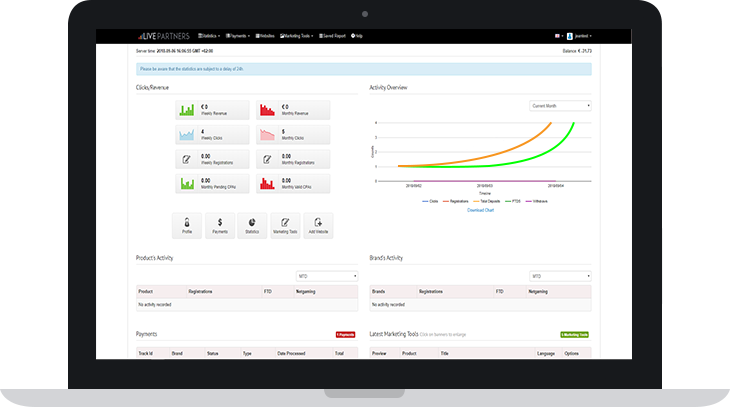
How to build a recruiter flywheel without turning your payouts into a courtroom drama. Translate into German while preserving paragraphs and headings
Slotornado NZ is an excellent and safe casino for players, as it is licensed.
Most casino affiliate programs don’t have a traffic problem. They have a leverage problem.
You can grind outbound forever, or you can turn your best partners into a distribution layer that recruits, vets, and “pre-screens” new partners through trust. That’s what multi-tier commissions are supposed to do. “Supposed to,” because the internet is full of tier plans that accidentally create margin leaks, disputes, and very creative forms of bonus abuse.
If you want multi-tier to actually work, you need two things:
- math that doesn’t punish your finance team
- rules that don’t punish your partner manager
This is the operator-grade way to design it, publish it, and implement it in Scaleo without breaking attribution or your sanity.
The short definition you can paste into your program terms
A multi-tier plan pays the affiliate who drove the player (Tier 1) and pays an override to the affiliate who recruited that affiliate (Tier 2). Optional deeper tiers exist, but every extra tier increases complexity and “who owns what” disputes.
Here’s the core idea in one table:
| Layer | Who gets paid | What they’re paid for | Typical shape |
| Tier 1 | The affiliate who acquired the player | Direct conversions (FTD / deposit / RevShare, etc.) | Your normal commission plan |
| Tier 2 | The recruiter who brought Tier 1 into your program | A small override on Tier 1’s payout | % of Tier 1 payout (predictable) |
| Tier 3 | The recruiter of the recruiter | Usually not worth it | Tiny % + strict rules |
If that sounds like “MLM vibes,” it doesn’t have to be. The difference is you’re not paying infinite depth on vague “downline revenue.” You’re paying a controlled override on a known payout stream, with clear eligibility rules.
When multi-tier actually fits iGaming?
Multi-tier works best when you have at least one of these realities:
- You operate multiple brands or licenses and you need more quality-controlled deal flow than your team can source manually
- Your best affiliates already run “mini networks” (they mentor smaller publishers, streamers, tipsters, local media)
- Your onboarding overhead is high (KYC, compliance rules, GEO restrictions, creative approvals, payment cadence)
- You’ve noticed something uncomfortable: cold outreach brings volume, but trusted introductions bring players
If your program is small and you’re still struggling with basic tracking hygiene, multi-tier won’t save you. It will multiply your tracking problems and turn them into payout problems.
The only tier structure that stays sane: 2 tiers
You’ll see people pitch 4–5 tiers like it’s a virtue. It isn’t. Deep tiers mainly reward distance, not value. In casino economics, distance eats margin.
A practical default for most operators:
- Tier 1: your normal CPA / RevShare / Hybrid
- Tier 2: 3%–10% override on Tier 1 payout
- Tier 3: only if you have a strong reason, and it’s tiny
And here’s the important part: tie Tier 2 to Tier 1’s payout, not to casino revenue. Revenue-based overrides sound “fair,” but they create nasty edge cases when deductions, negative carryover, VIP deals, or retroactive adjustments hit.
Setting rates without lighting your margins on fire
A multi-tier plan is not “free growth.” It’s paid growth with a compounding acquisition channel. Your job is to pay for the right behavior, not every behavior.
Use these guardrails:
- Keep Tier 2 small and boring
Boring is good. Boring is sustainable. A 6% override on Tier 1 payout is easier to defend than “2% of NGR forever across the tree.” - Cap the total override exposure
Not a vibe-based cap. A written cap. For example: “Total overrides on a single Tier 1 payout cannot exceed X%.”
That cap is your margin seatbelt. - Pay higher overrides only on proven quality
If you want to get fancy, do it with eligibility, not with depth. Higher overrides for recruiters whose sub-affiliates consistently hit deposit-rate targets and stay compliant.
Here’s a clean rate model most finance teams won’t hate:
| Tier | Payout logic | Typical range | Why it works |
| Tier 1 | CPA / RevShare / Hybrid | Normal program | You’re buying acquisition |
| Tier 2 | % of Tier 1 payout | 3%–10% | Predictable, auditable |
| Tier 3 | % of Tier 2 or Tier 1 payout | 0%–3% | Only if you’re disciplined |
Which base model behaves best with overrides
The base commission model changes the psychology of the plan.
RevShare-heavy programs
Tier 2 overrides encourage recruiters to onboard partners who can retain players, not just “spike FTDs.” If Tier 1 makes more over time, Tier 2 makes more over time. Alignment is the whole point.
CPA-heavy programs
Tier 2 can accidentally create a CPA farming machine if you don’t add gates. CPA is liquid cash. People will try to print it.
Hybrid
Usually the most stable: recruiters get enough immediate reward to care, but you still bias toward long-term value.
A simple example that partners actually understand:
Tier 1: 30% RevShare
Tier 2: 6% override on Tier 1 payout
Tier 1 earns $400 this month → recruiter earns $24
No mysticism. No “we’ll calculate it later.” That’s how you prevent support tickets.
Attribution: the part everyone “assumes” until someone screams
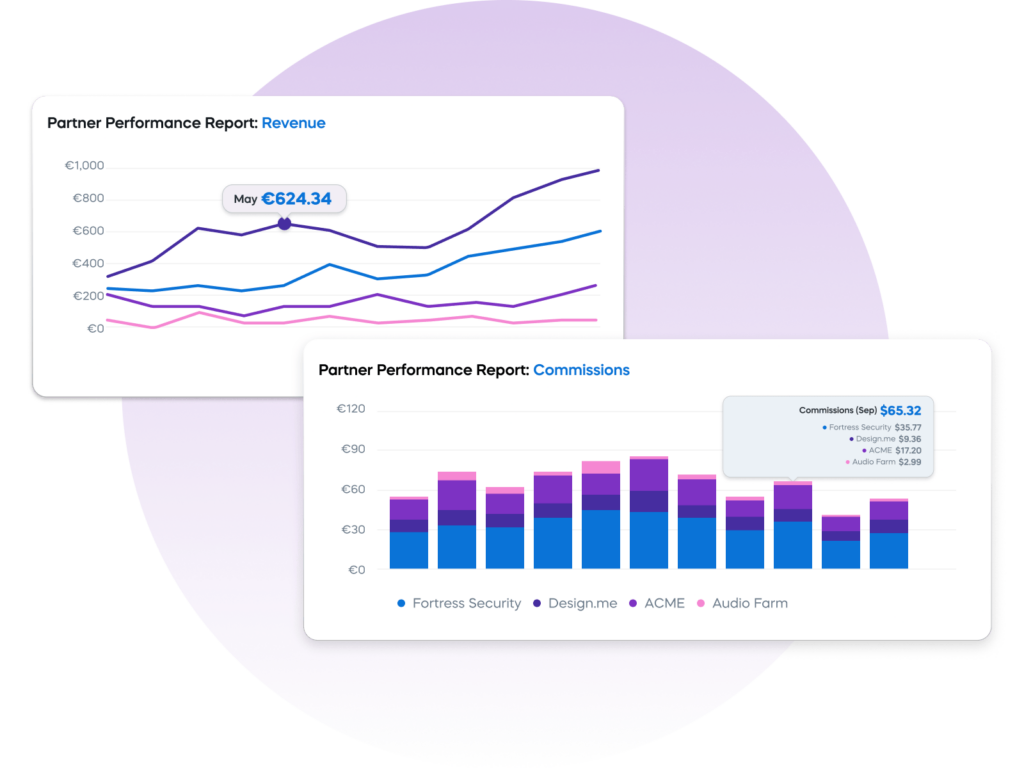
Multi-tier doesn’t replace your attribution model. It sits on top of it. If your attribution rules are fuzzy, multi-tier makes the fuzz expensive.
Pick one default and publish it clearly:
- Last touch: credit goes to the last eligible click before conversion (most common in casinos)
- First touch: credit goes to the first eligible touch (good for discovery-heavy programs)
- Linear: split credit across touches (rare in casinos unless you run multi-channel partnership models)
Most casino programs should keep it simple: last touch by default, with exceptions only when you can explain them in one sentence.
And now the operator-grade sentence you need in your terms:
“Attribution determines Tier 1. Overrides are calculated strictly as a percentage of Tier 1 payout.”
That line is your dispute firewall.
The dispute-proof rules nobody writes (and then everyone regrets)
This is where multi-tier plans win or implode. These rules feel “legal,” but they’re actually operational. Write them. Publish them. Repeat them.
Sub-affiliate ownership
Who owns the sub-affiliate relationship?
You need a policy for:
Recruiter switch requests (sub wants to “move” under a different recruiter)
A sub-affiliate leaves the program and later returns
The recruiter is terminated or goes inactive
A sane default:
The recruiter relationship is locked for X days after approval
After that, changes require operator approval and documented reason
Recruiter termination freezes override eligibility from that date forward
Dormancy rules
If a recruiter disappears for six months, should they still get paid overrides forever? Operators usually say “no.” Affiliates usually assume “yes.”
Pick a rule:
Override eligibility requires the recruiter to remain active (e.g., logins, compliance confirmation, or minimum activity)
Or override eligibility continues only while the recruiter remains in good standing (not banned, not violating rules)
What matters is consistency. “Case-by-case” becomes “why are you treating me differently?”
Deductions, carryover, and what “payout” actually means
If Tier 1 is RevShare on NGR, Tier 2 override must be defined against the final Tier 1 payout after your standard adjustments. Otherwise, you’ll get the classic argument: “You deducted too much, and now my recruiter payout is wrong too.”
Write it plainly:
Overrides are calculated on Tier 1 net payout after all standard adjustments (chargebacks, reversals, self-exclusion, fraud, negative carryover policy if applicable)
Conflicts: two recruiters claim the same sub
This happens more than anyone admits. If you don’t define it, you’ll define it mid-drama.
Define it:
The recruiter relationship is assigned when a sub-affiliate is approved in the system. Not by screenshot, not by email thread, not by who “talked first.”
Quality gates and fraud controls that actually matter in casinos
Multi-tier amplifies behavior. Good or bad.
So don’t just “allow tiers.” Gate them.
| Control | What you enforce | Why it saves you |
| Sub-affiliate approval | Manual or criteria-based approval | Stops brand risk early |
| GEO + license rules | Allowed markets per brand/license | Prevents regulatory headaches |
| Brand bidding & PPC rules | Search policy + negative keyword enforcement | Prevents channel conflict |
| Deposit-rate thresholds | Minimum FTD/registration ratio | Blocks junk funnels |
| Chargeback/fraud thresholds | Hard limits + clawbacks | Protects margin |
| Cool-off periods | Delayed CPA release / RevShare confirmation | Avoids paying on noise |
If you’re thinking “this sounds strict,” good. Casinos aren’t Shopify dropshipping. Your payout logic is downstream from compliance.
Three real-world scenarios where multi-tier either prints money or prints disputes
Scenario 1: The “mini network” super-affiliate
You have one partner who’s basically an affiliate manager in disguise. They mentor smaller publishers, they know who’s legit, and they keep people in line because their reputation is attached.
Multi-tier works beautifully here because:
You’re paying for acquisition plus recruitment plus informal policing.
You reduce onboarding overhead because subs arrive pre-educated.
You get better compliance with less internal effort.
The win condition: keep Tier 2 modest, publish the rules, and give that recruiter visibility into reporting.
Scenario 2: The CPA farm disguised as a recruitment engine
You launch multi-tier with juicy CPA and no quality gates. Recruiters bring “subs” who run low-quality paid traffic, spammy funnels, or bonus-abuse loops. You pay fast. Then you spend the next 60 days clawing back payouts and arguing.
The fix is boring:
Cool-off periods.
Deposit-rate thresholds.
Manual approval for subs.
Clawbacks that are automatic, not emotional.
Scenario 3: Multi-brand operator with overlapping promos
You run multiple brands, multiple GEOs, and affiliates promote across them. Without clean attribution and brand-level rules, you get disputes like:
“Player deposited on Brand B but came via Brand A funnel”
“Sub-affiliate used the wrong creative in the wrong GEO”
“Recruiter claims the sub only joined because of them, not because of your public signup form”
Multi-tier doesn’t cause these disputes. It just makes them expensive enough that everyone suddenly cares.
Implementing multi-tier in Scaleo without custom code

This is the rollout that works for lean teams: structured, testable, and designed to avoid public embarrassment.
- Define your tier policy like a product spec
Not “we’ll do 2 tiers.”
Write the exact math, the caps, the dormancy rules, the switch rules, the clawback triggers. If it isn’t written, it isn’t real. - Configure the commission logic
Tier 1: your base plan (CPA/RevShare/Hybrid)
Tier 2: override as % of Tier 1 payout
Add caps and eligibility rules up front
Screenshot idea: Commission plan settings showing Tier 2 override logic and caps.
- Lock down attribution and event integrity
This is not optional. If you can’t trust events, you can’t trust payouts.
Implement:
S2S postbacks for signup, KYC, FTD, deposits
Offline conversion ingestion if deposits are verified later
Unique click validation to reduce bot inflation
Clear attribution model (usually last touch)
- Build the sub-affiliate onboarding flow
Let recruiters invite subs, but don’t let them auto-approve them into chaos.
Route sub signups through:
approval rules
GEO policy acknowledgment
brand bidding policy acknowledgment
creative library access
- Make payouts and reporting unambiguous
Your goal is that a recruiter can look at a report and understand why they earned what they earned without opening a support ticket.
Show line items by:
Tier
Affiliate
Brand/GEO
Conversion type (FTD, deposit, etc.)
Adjustment reason if clawed back
If you want to keep recruiters loyal, pay correctly and on time. Everything else is theater.
KPIs that tell you if the plan is working (or quietly rotting)
Track the metrics that reveal quality, not just volume:
Sub-affiliate activation rate (within 30 days)
Deposit rate split by direct vs sub traffic
Override-to-revenue ratio (your margin reality check)
Dispute rate (if it’s rising, your rules are unclear)
Recruiter churn (multi-tier should reduce it, not increase it)
If your override-to-revenue ratio is climbing and your deposit rate is falling, you didn’t create a growth flywheel. You created a leak.
The common pitfalls that look smart until they ruin you
Overly generous deep tiers: feels exciting, destroys margin, invites disputes
No quality gates: turns recruitment into CPA farming
Vague “ownership” rules: turns partner management into arbitration
Pixel-only tracking: turns payouts into guesswork in 2026
Opaque program terms: guarantees you’ll argue with your best partners later
FAQ
What’s the difference between a multi-tier override and a referral bonus?
Referral bonus is a one-time payment for bringing in a new affiliate.
Multi-tier override is ongoing and tied to performance. If you want long-term alignment, overrides beat one-time bonuses.
How many tiers should a casino affiliate program use?
Two. Most of the time, always two. A third tier is only defensible when you have strong controls and a clear business reason.
How do we prevent abuse?
Approval + quality gates + cool-off periods + automated clawbacks + S2S tracking. If any of those are missing, you’re relying on hope, and hope doesn’t reconcile payouts.
Should Tier 2 be based on revenue or on Tier 1 payout?
Tier 1 payout. It’s cleaner, auditable, and prevents deductions/carryover from becoming a legal debate.
Links (optional, add at the end of your post)
Scaleo Commission Constructor documentation
Scaleo S2S Postback / Event tracking documentation
Scaleo Anti-Fraud Logic overview
Scaleo Invoicing & Payout automation documentation
Scaleo Partner portal / permissions documentation